Stim's sustainability strategy
Stim's sustainability strategy clarifies our long-term work for a more inclusive and sustainable music scene. Focus lies on social sustainability – where we have the greatest opportunity to make a difference.
Music is created by people – and people need secure, fair and stable conditions. Stim's mission is to ensure music creators' rights to compensation. A mission which in itself is a contribution to economic and social sustainability in the music industry.
In 2025, Stim implemented a new sustainability strategy. The strategy strengthens the link between sustainability work and our core operations, providing a clearer structure for the road ahead.
The strategy is based on analysis carried out during 2024 together with Nordic collaboration organizations. The analysis showed that social issues – particularly diversity, inclusion, mental health and economic security – are crucial for a sustainable music scene in the longterm.
Our priority areas
Stim's sustainability strategy focuses on three areas where we have the greatest opportunity to make a difference:
- Diversity, equity and inclusion
- Mental health
- Secure economic conditions
For Stim this means that sustainability is an integrated part of organizational development, decision-making and industry collaboration.
How we work
The strategy is implemented through three approaches:
Invest – We prioritize resources for initiatives and collaborations that strengthen social sustainability in the music industry.
Highlight – We use our data and insights to shed light on structural challenges and to contribute knowledge to the industry.
Collaborate – We actively participate in national and Nordic forums to contribute to long-term and systematic development.
The strategy in practice – examples from 2025
Invest
Stim supports Who Can Become a Producer (Vem Kan Bli Producent, VKBP), an initiative launched by Popkollo aimed at strengthening the position of women and trans people in music production. Through training and networking, the initiative contributes to increased representation in an area where these groups have historically been underrepresented.
Stim annually awards the Stim Scholarship (Stimstipendiet), which aims to promote new music of high artistic quality. At the same time there is a stated ambition for an even gender distribution among the scholarship recipients. In 2025, the share of women receiving the scholarship amounted to 47 percent, compared with women currently making up 21.7 percent of those affiliated with Stim.
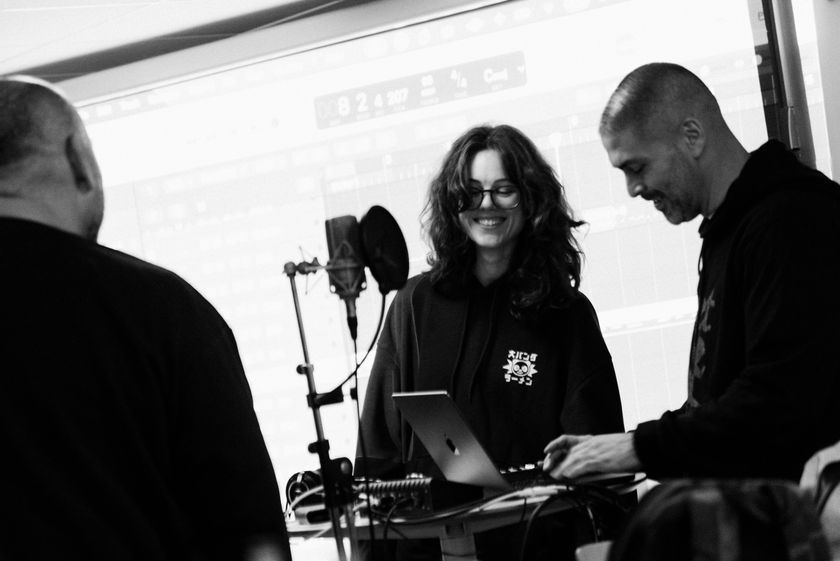
To lower the barriers to music creation, Stim offers free access to recording studios for members through Stim Music Room. In 2025, the offering was expanded with pop-up studios in Stockholm, Malmö, Sundsvall and Gothenburg.
Stim also organized Redline Workshop, a tour where music producers Salla and Masse Salazar met young music creators in Luleå, Umeå, Sundsvall, Stockholm, Eskilstuna, Örebro, Karlstad, Linköping, Malmö and Gothenburg. The focus was on the process from idea to release as well as knowledge about rights and remuneration models.
Highlight
Stim has participated in Musiksverige's perspective survey, which maps experiences of inclusion and equality in the Swedish music industry. The results form a basis for continued dialogue and development.
By contributing data, analysis and spread of results, Stim works to increase transparency and to promote fact-based discussion about the industry's structural challenges.
Collaborate
A central initiative is the Equality List (Jämlikhetslistan), a mapping of over 100 ongoing initiatives in gender equality, diversity, hbtqi+, mental health and accessibility in the music sector. The purpose is to make existing efforts visible and to strengthen collaboration between parties. The list is planned to be published in 2026.
At the Nordic level, three collaboration meetings were held in 2025 between the Nordic copyright societies focusing on sustainability issues and common challenges.
Long-term work
Stim's sustainability work is closely linked to our mission to ensure music creators' rights and to contribute to a vibrant music scene. The strategy provides a clear direction for how we prioritize efforts and collaborate with other industry parties.
The work is long-term and is gradually developed in dialogue with members and partners.